

Author’s Note
This story is fictional, yet the experiences described reflect patterns observed in a recent paper published in the Journal of Business Venturing Insights discussing how entrepreneurs work through complex and uncertain problem spaces. Titled “Navigating complex problem spaces: How emotion and energy shape entrepreneurial agency in serendipitous encounters” by Nele Marie Terveen, the study shows that early-stage founders often start with broad and loosely defined challenges. As they attempt to make sense of these challenges, they encounter a mix of emotional reactions, including excitement, confusion, frustration, and curiosity. These emotions serve as meaningful cues. They help shape how entrepreneurs refine their ideas, decide which directions to pursue, and recognize when a particular path is not a good fit.
The research also highlights the role of everyday encounters in generating insight. Serendipity is not simply luck; it emerges from how founders interpret their interactions with others, how aligned they feel with what they hear, and the energy or depletion that follows. Real-time journaling tools can support this process because they help entrepreneurs capture subtle emotional shifts that may otherwise be overlooked.
Parker’s story illustrates these themes in an accessible way. It reflects emotional alignment and misalignment, the challenges of navigating uncertainty, the value of small human moments, and the insight that often arises through lived experience and thoughtful reflection rather than through purely linear analysis.
The Weight of Too Many Worlds
A story by Andy Hillier

“Every time I narrow it down, the whole thing crashes.” he said.
If you’ve built something from scratch, you likely know that feeling. Too many ideas. Too much advice. Too much uncertainty. At some point the problem becomes the problem.
That was where Parker was stuck.
Indie game development is a universe of possibilities. He had tried nearly all of them. Every mentor pointed in a different direction. Every friend had a strong opinion. Online forums added three more features to a list he “should” probably consider

Should it be on mobile or PC?
Story-driven or feature-driven?
Cute or gritty?
A three-hour or thirty-hour game?
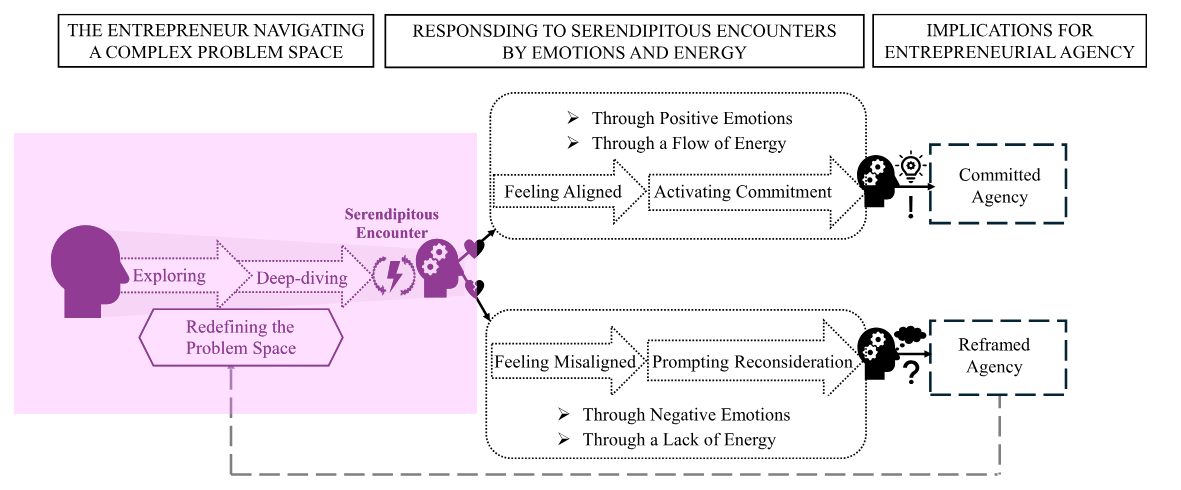
Parker felt it: excitement in one moment, pressure in the next, and a steady stream of doubt running underneath.
One of the showcase organizers noticed his stress and gave him a small task.

“Talk to a few people today”, she said. “But don’t write down what they say. Write down how the conversation feels.”
He agreed because it sounded simple. He didn’t realize yet that reflection from AI journaling would shift everything for him.
The Encounters That Pulled Him Down
The first player to try the demo launched into a long explanation of game balance metrics. It was smart and detailed, but for Parker, completely draining.

Parker nodded politely, but his stomach tightened.
The second player said the art style looked “fine”. That was somehow much worse than criticism.
The third played silently, shrugged, and walked away.

None of these moments were dramatic. But each one drained more of Parker’s energy.
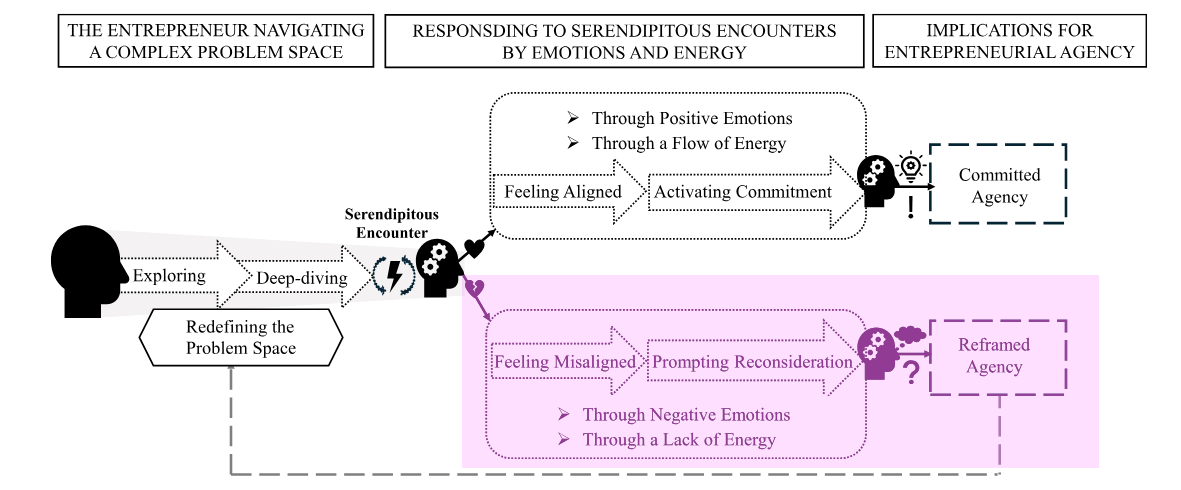

Parker simply felt discouraged.
The Glitch That Changed Everything
Then the moment came.
It wasn’t clever, planned, or even working correctly.
During a demo, Parker’s puzzle-platformer crashed again. The character stepped onto a platform, twitched once, and then dropped straight through the floor as if gravity suddenly forgot how to behave. He bounded off an invisible barrier, folded in on himself like a marionette with cut strings, and then flopped upward in a jagged arc that made absolutely no sense.

For a split second, the room felt silent.
Parker’s heart sank. Heat rushed to his face. His fingers
hovered frozen above the keyboard, unsure whether to kill the program or
pretend it hadn’t happened. He could almost hear all the careful design work
collapsing in the same ridiculous way his character had. This was his
nightmare. Not criticism. Not even failure.
Public failure.

He braced himself for the sigh, the polite smile, the “thanks anyway.”
Before he could speak, the player burst out laughing. An unrestrained laugh that bounded across the room, causing several people turn their heads.
“That,” he said, while still laughing and pointing at the screen, “actually feels fun.”
His eyes were bright. He wasn’t mocking. He was delighted!
Parker blinked, not quite sure how to react. Embarrassment
didn’t disappear, but something else pushed against it. A spark of surprise. Of
possibility. He replayed the moment over again. The glitch wasn’t elegant or
intentional, but it had created real joy.
Unscripted joy.

The player kept going on, energized by the chaotic moment.
Parker felt his shoulders loosen. The spark grew. It wasn’t logic. It was something lighter, something he could feel ripple through him.
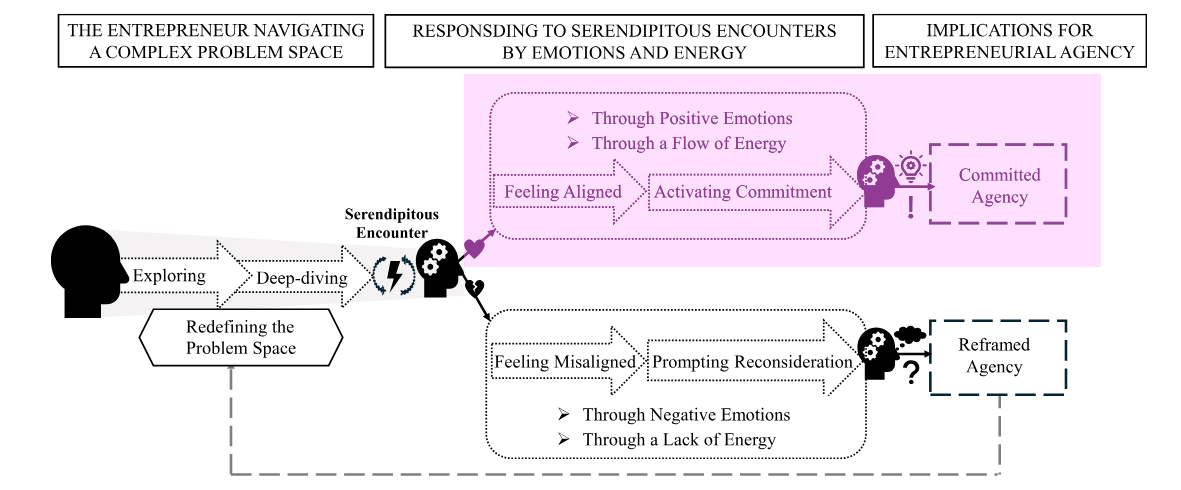
Parker couldn’t stop smiling.
Putting the Feeling to Work
That night, Parker opened his AI journal. He wrote down the day’s conversations to analyze them, following the organizer’s advice, including how each one felt. The draining ones stood out clearly. So did the spark from the glitch.
He realized he wasn’t just collecting feedback. He was collecting emotions, and that intuition was forming into the path forward.
A new game concept eventually emerged. A slapstick physics adventure built around unpredictable, joyful chaos rather than precise play features. A game where the fun came from the unexpected.
It was simple, honest, and it felt right.
Once the feeling aligned, energy followed. Parker sketched mechanics, prototyped, and tested. He moved with a clarity he had not felt in months.

What Parker Learned
Entrepreneurship rarely begins with answers. Often it begins with encounters. Some discouraging. Some confusing. Some quietly powerful.
Emotions are not distractions, but signals. Positive feelings can reveal when something resonates. Negative feelings can show when to rethink. Both matter.
Parker didn’t find direction by thinking harder. He found it by noticing what energized him and what didn’t. By paying attention to small, human reactions. By treating emotions as information.
Sometimes the idea you need isn’t hidden in a plan or a feature list. Sometimes it’s hiding in a glitch, waiting for someone to hear the laughter that follows.
Citations
[1] Terveen, N. M. (2025). Navigating complex problem spaces: How emotion and energy shape entrepreneurial agency in serendipitous encounters. Journal of Business Venturing Insights, 24, e00573. https://doi.org/10.1016/j.jbvi.2025.e00573


Leave a Reply